On a regular Wednesday, you’re probably not thinking about anything dramatic when you think about your day – perhaps a commute, a job to finish, dinner to get on the table. That’s the point. Cardiac arrest doesn’t wait for a dramatic moment. It happens in the ordinary ones, the ones nobody thinks to prepare for. And it’s rarely a stranger it happens to. It’s someone you love.
Around 32,000 Australians experience cardiac arrest outside of hospital every year with roughly one in three of them happening here in NSW. And contrary to what most of us picture (a marathon runner collapsing, a stressed executive at their desk), the overwhelming majority of these events happen in ordinary places, doing ordinary things.
We plan for a lot of things that will probably never happen. We keep a spare tyre in the boot for a flat we might never get. We carry an umbrella for the weather that might not show up. But for the one moment that statistically matters more than almost any other, most of us are carrying nothing at all.
The gap nobody talks about
Here’s the uncomfortable part: even when someone does everything right, the odds are often stacked against them.
Call triple zero. Start CPR. Send someone running for the nearest defibrillator – if there is one, if anyone knows where it is. Then wait.
Every minute that passes without defibrillation, a person’s chance of survival drops by around 10%. An ambulance doing everything right might still be too many crucial minutes away. In that gap, roughly 40% of people get bystander CPR, which is genuinely heroic, but fewer than 2% have a defibrillator used on them in time. And when CPR is combined with a defibrillator in that critical first three to five minutes, survival rates can climb as high as 70%.
That gap between “CPR alone” and “CPR plus a defib” is where the St John Pocket AED lives.
A defibrillator that fits in your day, not just your emergency kit
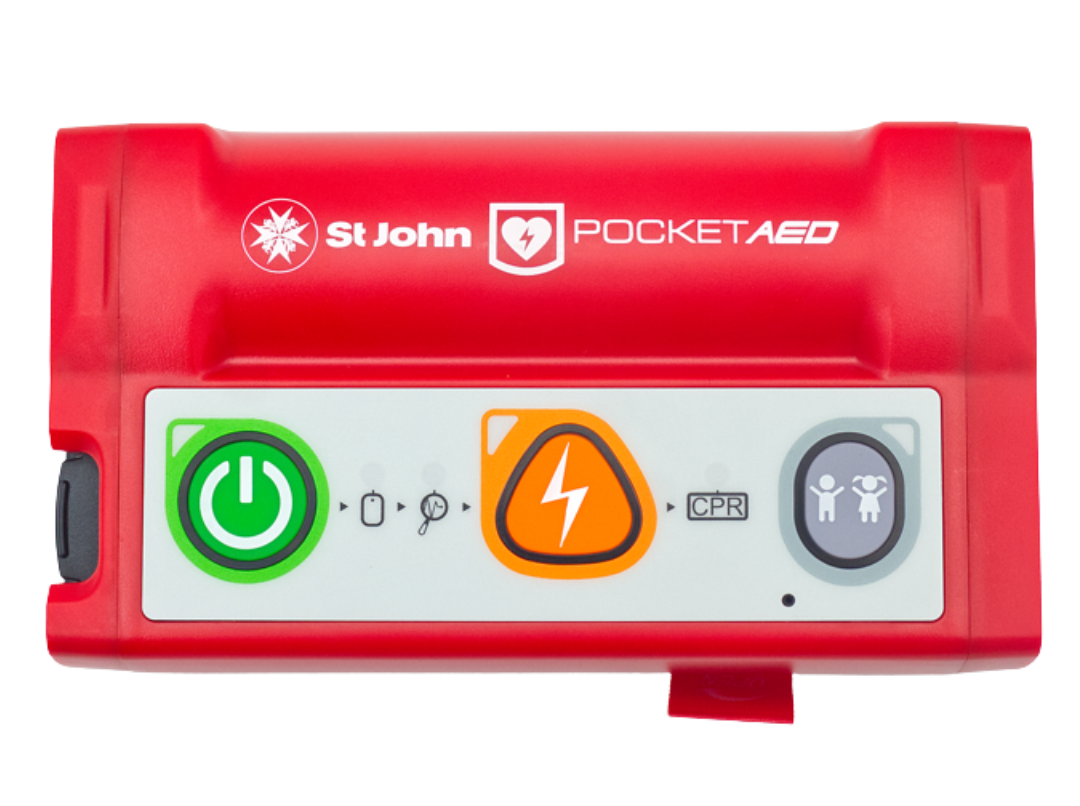
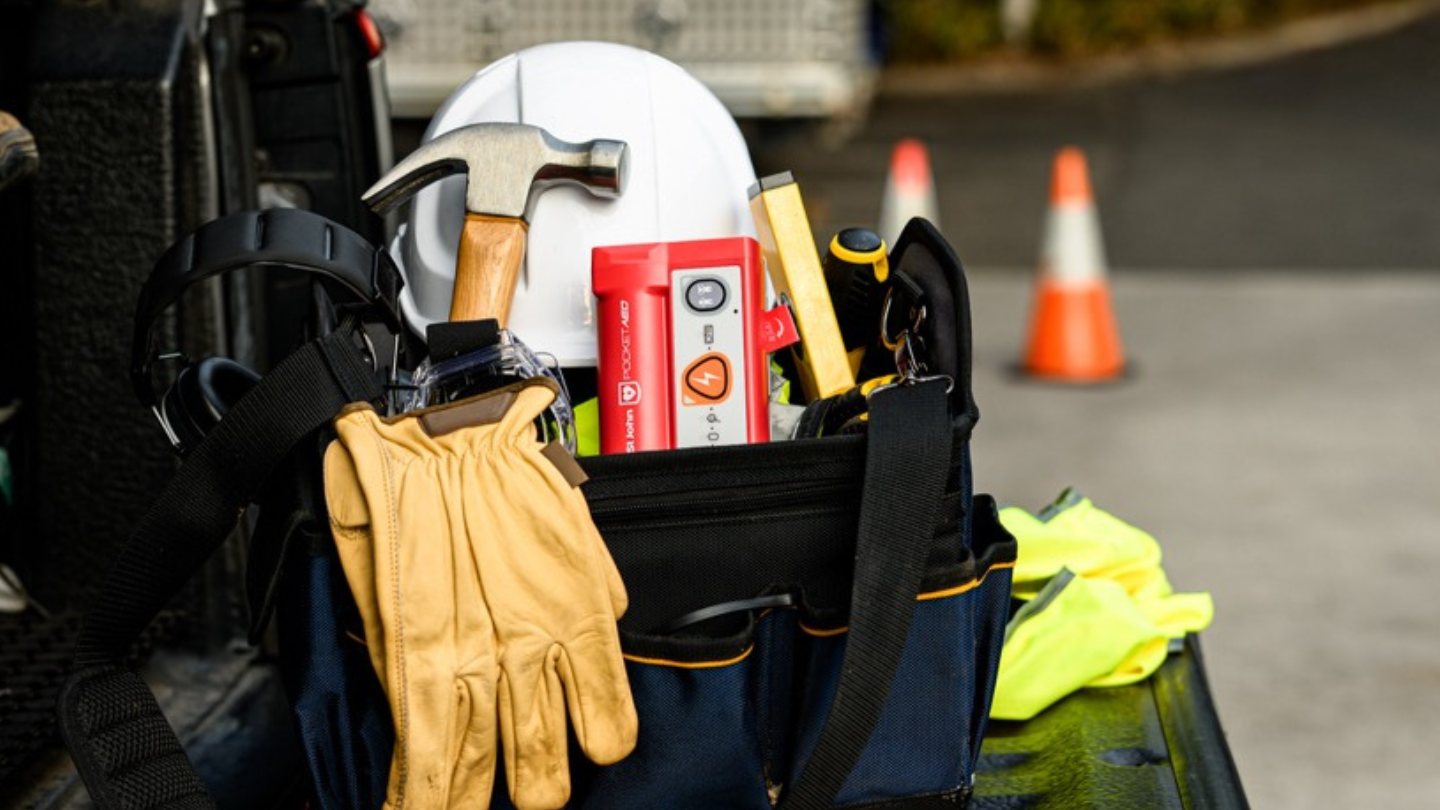
The St John Pocket AED is exactly what it sounds like: a fully capable defibrillator, small enough to carry with you. It’s right there in the moment you need it – in your bag, in the glovebox, clipped to a belt, in your jacket pocket or sitting on the kitchen bench next to the fruit bowl.
At only 700 grams, it’s lighter than a bottle of water, roughly the footprint of a phone, so it doesn’t ask you to change your life to carry it. It just quietly comes along
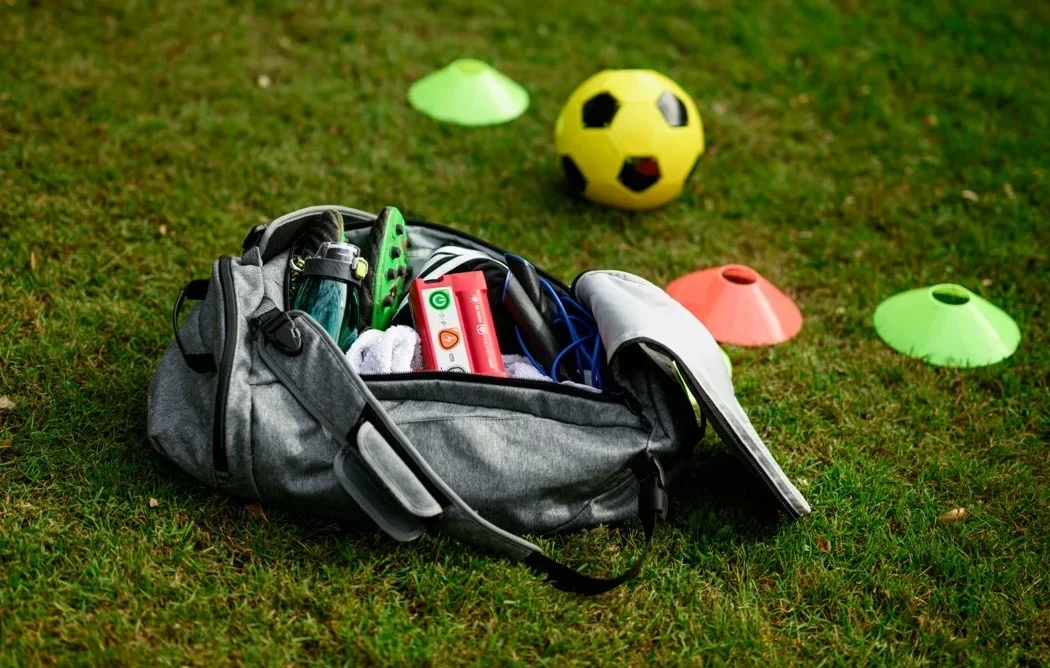
And here’s the part that matters most: going smaller doesn’t mean a compromise on performance. The Pocket AED delivers a shock with the same energy output as many traditional-sized defibrillator. It gives voice and visual prompts to guide anyone, qualified or not, calmly through every step, from placing the pads to delivering a shock. It even runs its own self-checks automatically every week, making sure it’s ready without you ever having to think about it.
For the home, the highway, the winding trail and the worksite
It’s tempting to make this a “just for home” story, given around 80% of cardiac arrests happen there. It’s the person you make dinner with, the one who taught you to drive, the one asleep down the hall. But that would sell the idea short because the same gap that shows up in a living room shows up everywhere else life happens too.
It’s the caravan two hours past mobile reception, well beyond where an ambulance can reach quickly. It’s the tinnie anchored offshore on a Saturday morning. It’s the tradie on a remote job site with a workmate and the RV explorers off the beaten track. It’s the SES volunteer on a bush track, the golfers at the ninth hole, the council crew out on the roads, the security team working a packed event.
Every one of these is a place where “the nearest AED” might be far away from “close enough.” The Pocket AED doesn’t replace the wall-mounted defibrillator in the office lobby or the shopping centre, a fixed AED covers base, and the St John Pocket AED covers everywhere else. It extends the map of where a life can be saved to wherever people are; at home, on the road, on the water, on site.
Why this one, and why now
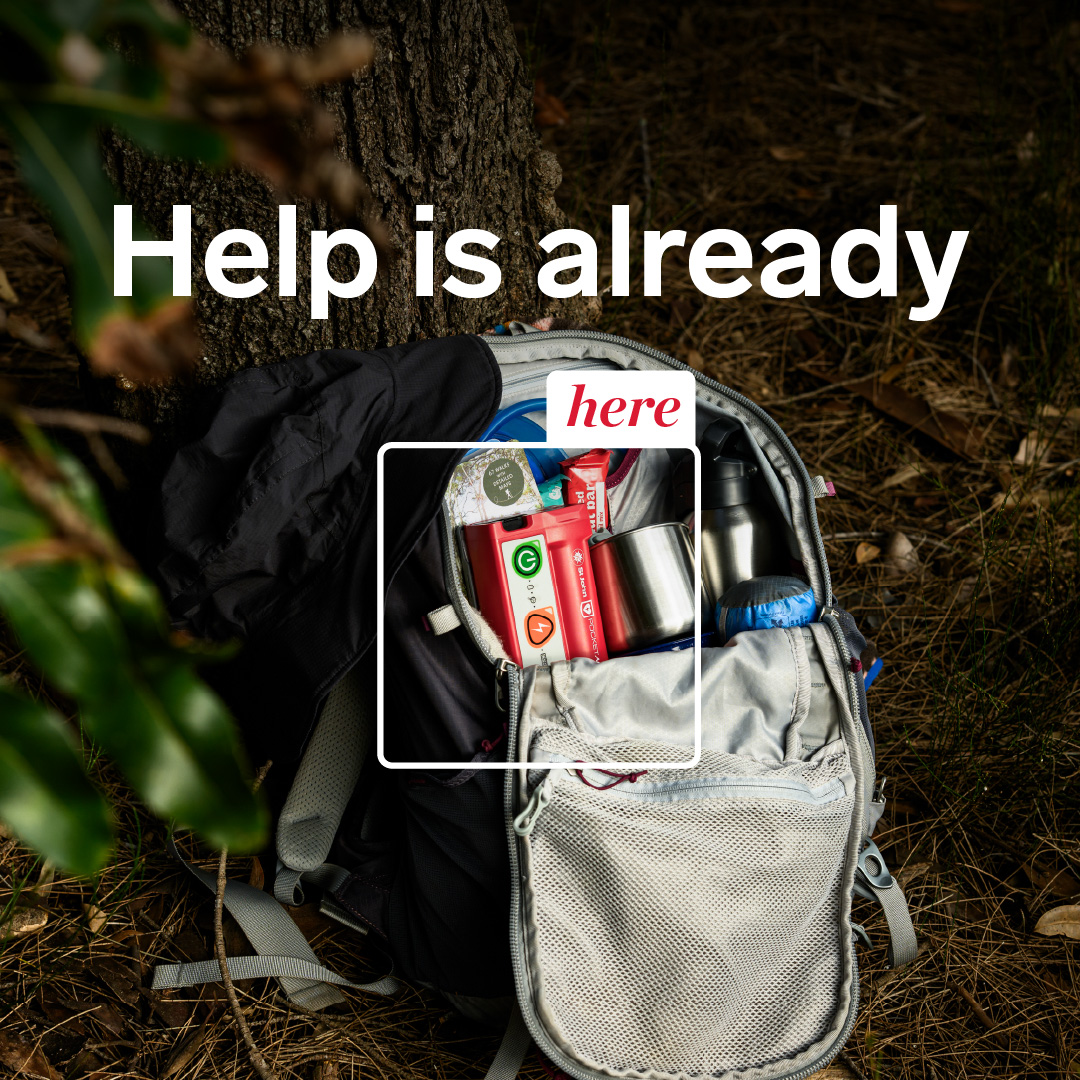
St John has spent well over a century being the organisation Australians trust to show up in exactly these moments – training volunteers, teaching first aid, and building the emergency response network that so many communities rely on. The St John Pocket AED is a game changer in accessible lifesaving equipment backed by a 5-year warranty and designed to survive real Aussie conditions – drop tested from 1.5M, it’s also been rated as dust-tight and water resistant.
Every purchase also helps fund St John NSW’s broader work training volunteers and expanding community access to first aid and defibrillation across the state. So, carrying one doesn’t just extend your own readiness, it helps extend everyone’s.
The takeaway
Most of us will never need to use a defibrillator. But if that ordinary Tuesday ever does become the moment it matters, the only thing that counts is whether help is close enough, right there in the crucial minutes you need it most.
The St John Pocket AED means it already is, wherever “there” happens to be.
St John
Pocket AED
See the full specs, watch it in action, and find out how to get one for your home, your vehicle, or your team.