
How We Help
First Aid in Schools
First Aid isn’t just for adults. First Aid in Schools brings practical, real-world skills into primary school classrooms across NSW, helping students understand what to do when something goes wrong.
Why First Aid education should start early
Every child deserves the confidence to act, and that confidence is built through learning the basics early.
First Aid knowledge is important at every age, but starting early helps it stick. Introducing these skills in primary school helps students recognise the signs of an emergency, know who to call and understand how they can help.
Learning First Aid at a young age builds familiarity and confidence. It encourages responsibility and gives students practical skills they can carry with them beyond the classroom.
That’s exactly what our First Aid in Schools program is designed to deliver. It brings age-appropriate, hands-on learning into primary school classrooms across NSW.
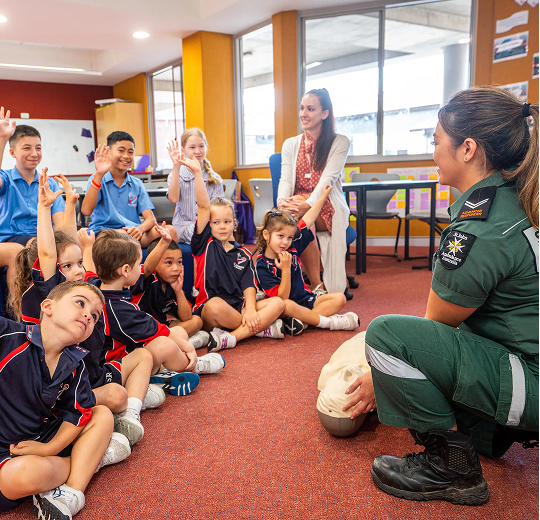
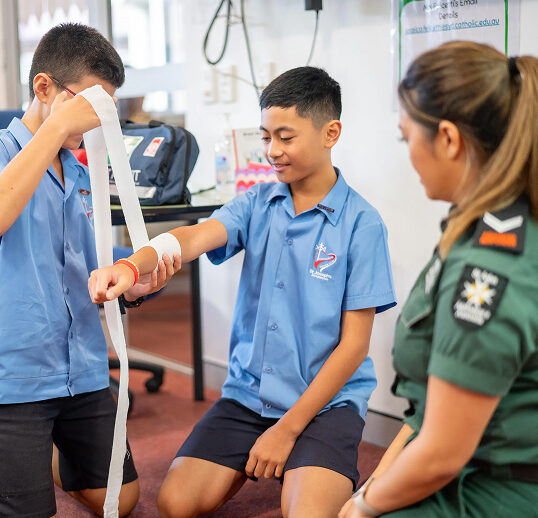
Course Delivery Options
First Aid in Schools is delivered through two models, allowing schools to choose the format that best suits their setting and schedule.
Online & Teacher Led
- Delivered by School
The First Aid in Schools eLearning platform is a free online platform which allows for teacher-led education, supported by online content.
Once a school signs up to use the program, they will be provided with an access link and login details to show the platform in the classroom.
Face-to-face Program
- Delivered by St John
The First Aid in Schools Program delivered in the school environment, allowing for demonstrations, interaction and greater student engagement.
The program is delivered via face-to-face sessions run by experienced St John Educators.
Course Outline
First Aid in Schools is structured across three primary stages, from Kindergarten to Year 6. Content is tailored to each stage level to ensure learning is age-appropriate, practical and relevant.
Students are introduced to core first aid principles, including recognising an emergency, seeking help, calling 000 and responding to common incidents. Each stage builds progressively on prior learning, reinforcing clear and simple actions students can remember.
Stage 1 (Kindergarten, Year 1 & 2)
Module 1 – Action Plan 1
Purpose: Introduction to the St John Ambulance Action Plan
Outcome:
- Recognising an emergency
- Calling triple zero in the event of an emergency
Module 4 – Cuts, Grazes and Nose Bleeds
Purpose: Educate students on the importance of bleeding control from cuts, grazes and nose bleeds and how to recognise and treat someone suffering from shock
Outcome:
- Provide awareness and skills required to manage someone bleeding and how to clean a wound
- Recognise and treat someone suffering from shock
Stage 2 (Year 3 & 4)
Module 2 – Action Plan 2
Purpose: Create a sound level of the St John Ambulance Action Plan and the Recovery Position
Outcome:
- Knowledge of DRSAB
- Performing the recovery position
Module 5 – Bites and Stings
Purpose: Provide an understanding of the different types of bites and stings and the important skills required to provide assistance to the various insect and creature bites or stings.
Outcome:
- Recognise the different types of bites and stings
- How to manage the different types of bites and stings
Module 6 – Asthma
Purpose: To educate students on the triggers, signs and symptoms and treatment for an asthma attack
Outcome:
- Recognise someone having an asthma attack
- Learn how to treat someone having an asthma attack
Stage 3 (Year 5 & 6)
Module 3 – Action Plan 3
Purpose: To introduce CPR to the Action Plan
Outcome:
- Revision of DRSABC + Recovery Position
- Learn how to perform CPR
Module 7 – Allergies and Anaphylaxis
Purpose: To educate students on triggers, signs and symptoms and treatment for someone suffering from an allergic reaction or anaphylaxis.
Outcome:
- Recognition of someone suffering from an allergic reaction or anaphylaxis
- How to treat someone suffering from anaphylaxis with an EpiPen
Module 8 – Burns
Purpose: To educate students on triggers, signs and symptoms and treatment for someone suffering from an allergic reaction or anaphylaxis.
Outcome:
- Recognise the different types of burns
- How to manage someone with a burn
- Recognise someone in shock and how to treat them
First Aid for High Schools
St John NSW is committed to empowering high school students with life-saving first aid skills that can make a critical difference in emergencies.
St John NSW is committed to empowering high school students with life-saving first aid skills that can make a critical difference in emergencies. While we don’t currently offer dedicated high school programs, we provide flexible on-site training that can be tailored to your school’s needs and schedule.
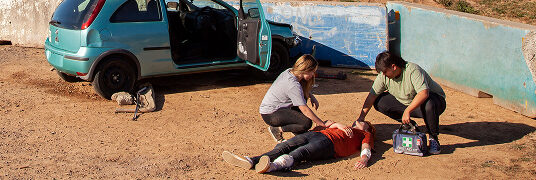
Learner Driver First Aid
Our free online training is designed to equip learner drivers and bystanders with basic first aid knowledge and the confidence to assist in the case that they are the first on scene at a road accident.
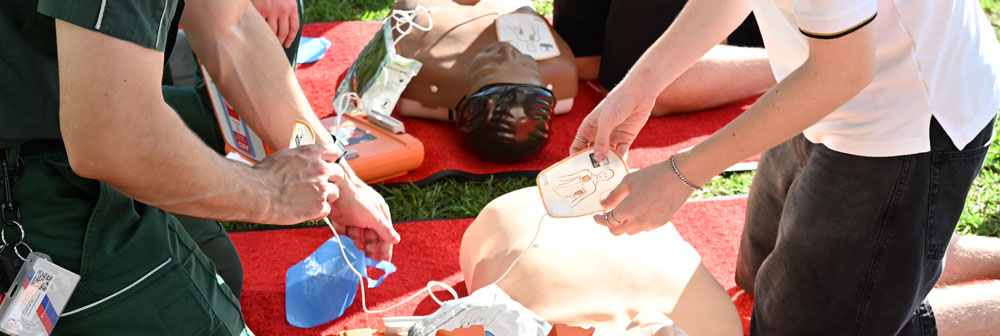
On Campus Training
St John NSW offers on-campus first aid training, bringing our experienced instructors directly to your school to deliver nationally recognised courses tailored to your students’ needs and schedule.
Register your school's interest today
Register your schools interest in our First Aid in Schools Program by filling in the registration form. Our First Aid in Schools team will contact you to finalise the details.
Please note: Places are limited, but we review every expression of interest with care.
FAQ
What should the students wear to the session?
We have some students with special needs. Can they join the session as well?
We will do everything possible to meet individual needs. Please get in touch to let us know of your requirements when you book your course: schools.program@stjohnnsw.com.au
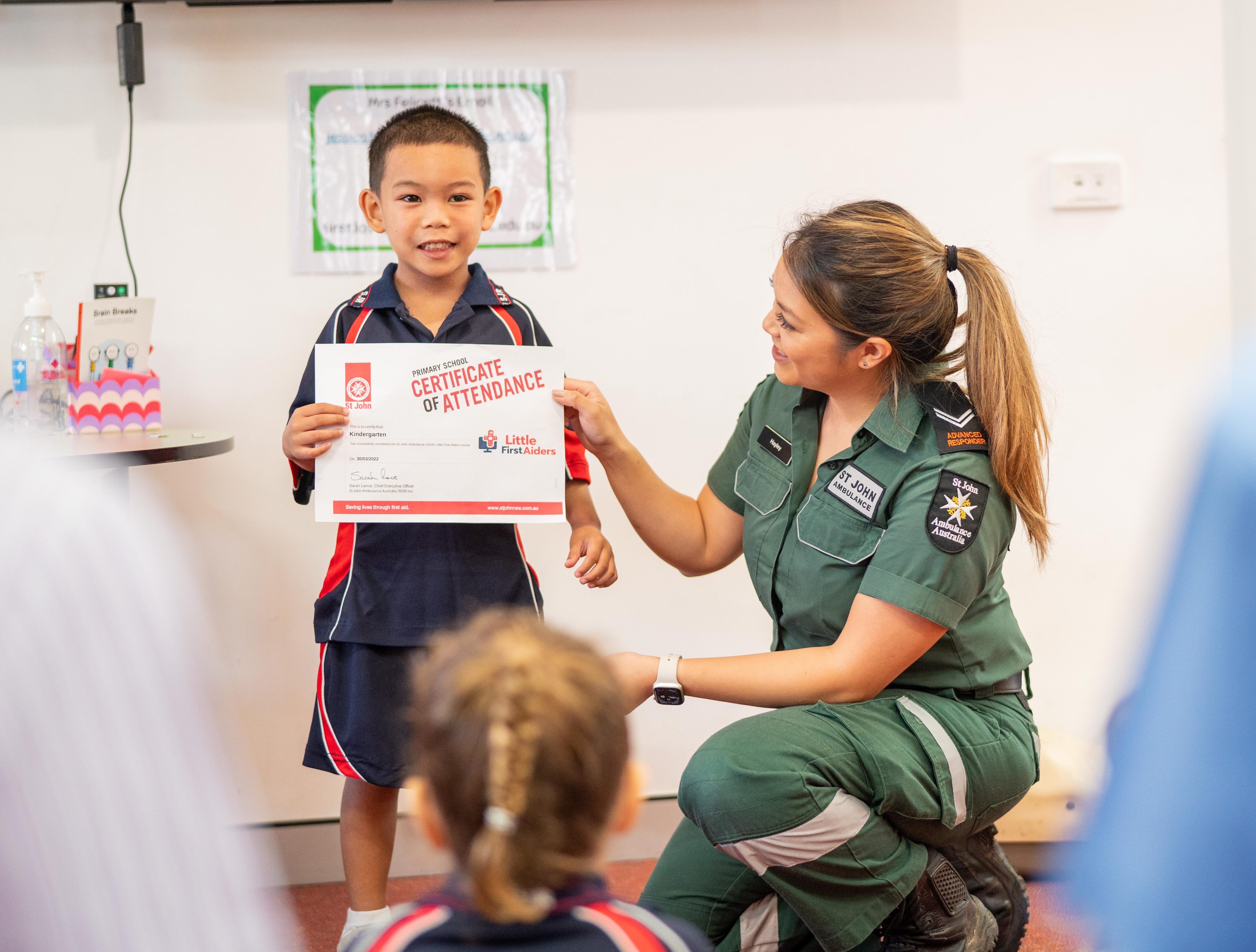
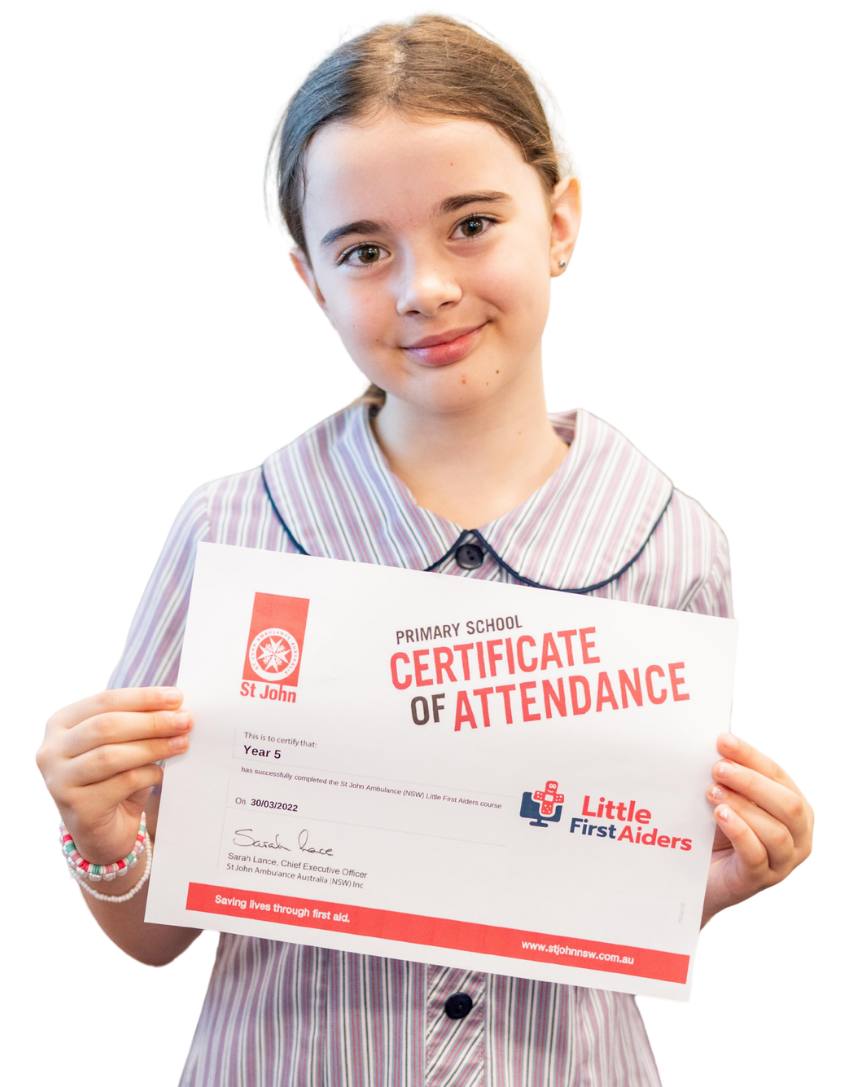
Will the students receive a certificate after completing the session?
I’ve just completed the booking form for my school. What happens now?
How many students can attend each session?
How much does it cost to enrol my school in the program?
Where do you run the sessions?
How long does the session go for?
For Stage 1 (Kindergarten, Year 1 & 2) it is a 45-minute session. For Stage 2 (Year 3 & 4) and Stage 3 (Year 5 & 6) they are 60-minute sessions.
I’m a parent of a student and would love our school to book in. How can I make this happen?
Contact our First Aid in Schools team by emailing: schools.program@stjohnnsw.com.au and we can send you resources to show your child’s teacher all about the program and how to book.
What if our school is in a very remote location?
Do your St John Ambulance Educators have Working with Children Checks?
All St John Ambulance NSW Educators are vetted and trained:
- Working with Children Check
- Criminal Record Check
- First Aid Qualification
- First Aid in Schools
- Educator Accreditation Training
Testimonial
"I was very impressed with the whole process from applying for the course, the venue and our trainer. I am so happy I've done this course as it's a good idea to have this knowledge not just at work, but in everyday life. You never know when these skills are required."
Vivienne
Student
We’re a Child Safe Organisation
Protecting and promoting the wellbeing of children and young people is central to our culture and the way we operate. We are proud that St John Ambulance NSW is a Child Wise accredited Organisation.
Child Wise is an internationally recognised accreditation that is led by the Australian Childhood Foundation to assesses how organisations are performing against the national standards of child safety.
St John Ambulance NSW is committed to continuing to provide a safe space for all children and young people, whether they are learning lifesaving skills, volunteering with us or present to us in a medical emergency.