
Australia have reached the 2026 FIFA World Cup Round of 32, taking on Egypt in Dallas – the Socceroos’ first-ever World Cup meeting with the Pharaohs. Whether you’re glued to the World Cup or lacing up for your own local match this week, one thing’s certain: soccer is a contact sport, and injuries happen.
Football Australia reports an estimated 1.93 million people across the country played soccer in 2025. But Australian Institute of Health and Welfare (AIHW) figures show around 5,400 Australians ended up in hospital from soccer injuries in 2024–25 alone. The good news? Most soccer injuries aren’t life-threatening, and knowing the right first response makes a genuine difference to recovery. Here’s what to look for, and what to do, for the seven injuries most likely to bring play to a stop.
Reminder: This guide covers general First Aid only. If you suspect a serious injury, call 000 immediately.
1. Ankle Sprains
What it looks like:
Sudden pain, swelling and difficulty putting weight on the foot, usually after landing awkwardly or getting caught in a tackle.
First Aid:
- Stop play immediately – don’t try to “run it off”
- Rest the joint and avoid weight-bearing
- Apply an ice pack, wrapped in a cloth and never directly on skin, for 15–20 minutes
- Compress with a firm bandage, and elevate above heart height where possible
- Seek medical review if swelling is severe, the joint looks deformed, or they can’t bear any weight at all
2. Knee ligament injuries (including ACL)
What it looks like:
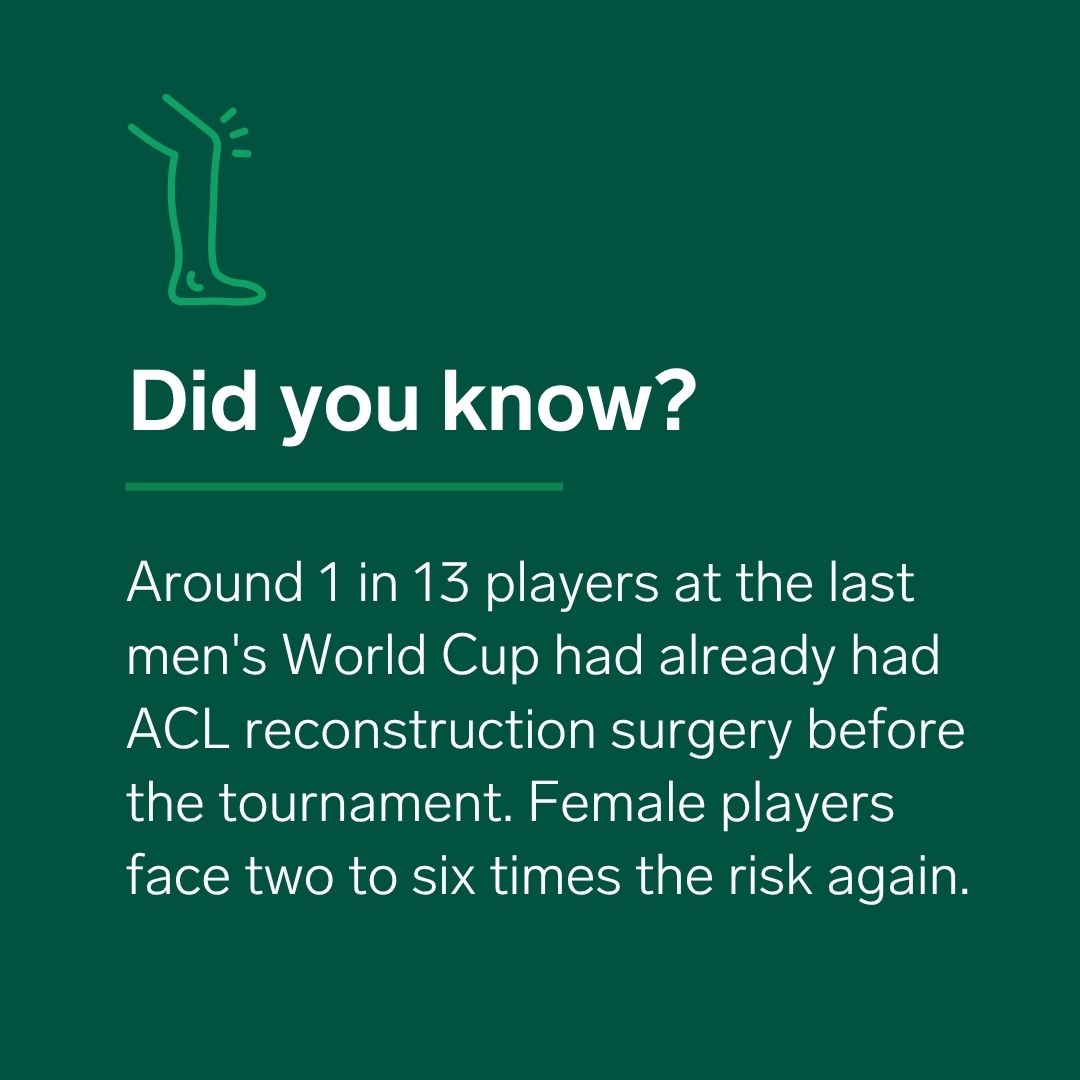
Sudden knee pain, a “pop,” or a feeling the knee has “given way”, usually from planting and twisting, not contact. Players often can’t continue, even if they can technically still stand.
First Aid:
- Stop activity immediately – don’t let them “test” the knee
- Support in the most comfortable position and avoid weight-bearing
- Apply an ice pack, wrapped in a cloth, for 15–20 minutes
- Use a compression bandage if comfortable, and elevate where possible
- Treat a “pop,” immediate swelling, or a knee that “gave way” as reasons for urgent review, even if they can still walk
2. Hamstring strains
What it looks like:
A sudden, sharp pain in the back of the thigh during a sprint or change of direction. It’s one of soccer’s most common soft-tissue injuries at every level, and around 1 in 4 soccer hospitalisations in Australia involve soft-tissue injuries like this.
First Aid:
- Stop activity straight away. Pushing through often turns a minor tear into a major one
- Ice the area for 15–20 minutes
- Gently compress with a bandage
- Avoid stretching or massaging the muscle for the first 48 hours
- Rest and elevate; see a physio for anything beyond mild tightness
4. Head knocks and concussion
What it looks like:
Any blow to the head can cause concussion – watch for confusion, dizziness, headache, nausea, or a player who “isn’t quite themselves.” Around 97% of intracranial injury hospitalisations from soccer are concussions.
First Aid:
- When in doubt, sit them out. Never return a player to the field if concussion is suspected
- Keep them still and monitor closely
- Call 000 for loss of consciousness, repeated vomiting, worsening headache, or seizure
- Any suspected concussion needs medical clearance before returning to play
5. Cuts, grazes and lacerations
First Aid:
- Apply firm, direct pressure with a clean dressing
- Clean once bleeding slows, cover with a sterile dressing
- Don’t press directly over a wound if a fracture is suspected underneath
- Seek medical attention for deep cuts, anything that won’t stop bleeding, or wounds near the eyes
What it looks like:
Broken or torn skin, visible bleeding, and sometimes grazing or dirt from the turf – usually from boot studs, a hard fall, or an accidental clash with another player.
6. Fractures and dislocations
What it looks like: Intense pain, swelling, and an obviously deformed or unnaturally positioned limb, usually after a heavy tackle or fall.
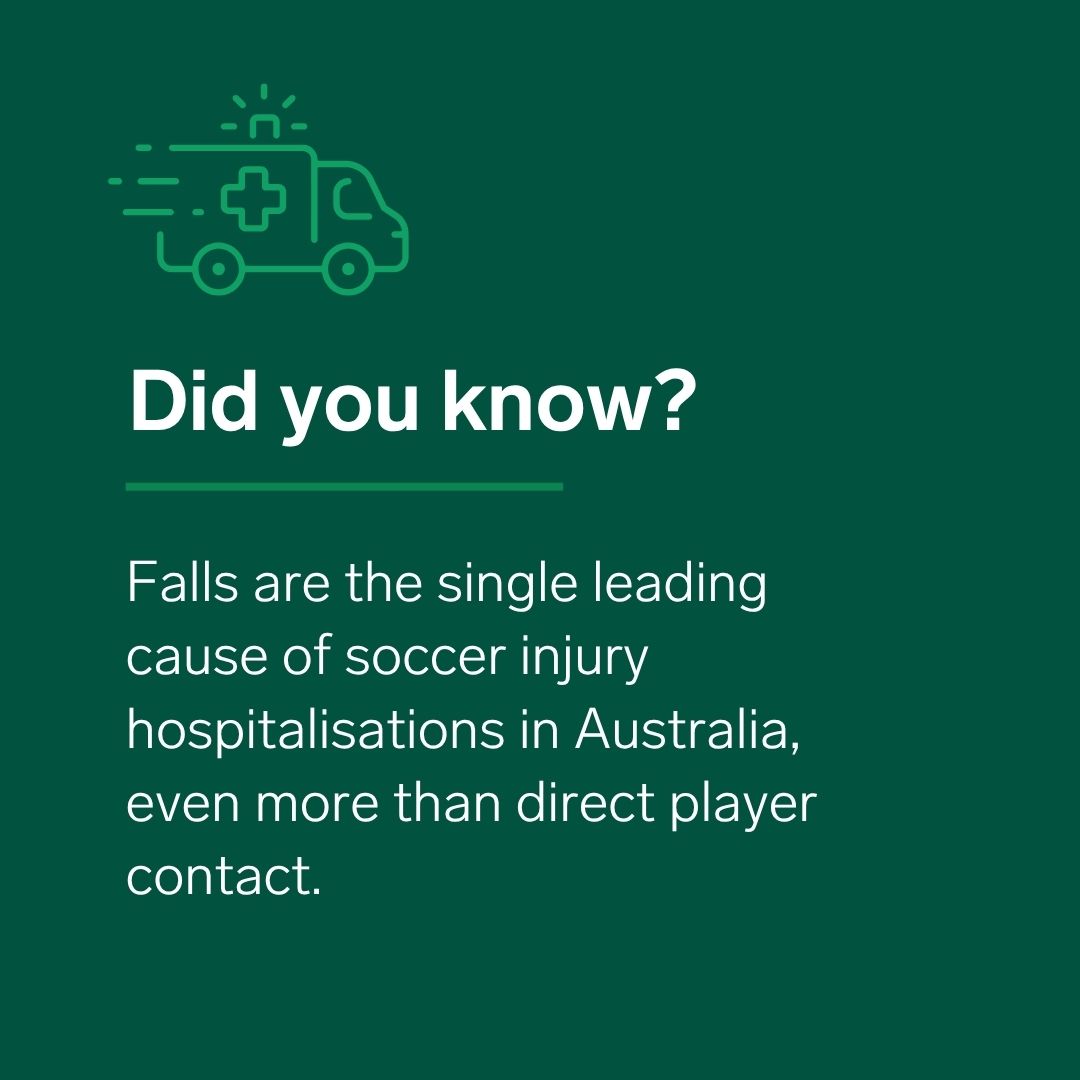
Fractures make up more than half of all soccer injury hospitalisations in Australia.
First Aid:
- Don’t attempt to realign or straighten the injury
- Keep the area still – splint or sling if trained to do so
- Call an ambulance immediately for any suspected fracture of the head, neck, spine, pelvis or thigh
- Treat for shock: keep the person warm, still and reassured
7. Heat exhaustion
What it looks like: Heat exhaustion is a real risk in soccer year-round, not just in pre-season and summer 5-a-side comps. Watch for heavy sweating, dizziness, nausea, headache, and pale, clammy skin.
First Aid:
- Move to shade or a cool area immediately, remove excess clothing or equipment
- Cool with water, wet cloths or a fan
- Offer small sips of water if fully conscious and able to swallow
- Call 000 if symptoms don’t improve quickly, or if you suspect heat stroke, including confusion, very high body temperature, hot dry skin, or collapse – this is a medical emergency
Be ready before you're needed
You don’t have to be a medical professional to make a real difference in the first few minutes after an injury.
St John NSW’s First Aid courses cover everything from sprains and fractures to CPR and concussion management.
Helpful resources for the sideline
Not sure if it’s serious enough for hospital?
Call Healthdirect on 1800 022 222 – a registered nurse will talk you through what’s happened and recommend next steps.It’s also genuinely useful when a player is downplaying an injury and pushing to stay on.
Worried about a head knock?
The HeadCheck App, developed by Murdoch Children’s Research Institute and endorsed by the AFL, walks First Aiders through concussion recognition step by step, and can connect straight to 000.
Carrying the basics.
A dedicated sports First Aid kit covers most of what’s needed above.
The most valuable resource is often a person, not an app.
In community soccer, there’s rarely a dedicated First Aider on the sideline. If you’ve got players, parents, or coaches who are First Aid trained, ask them to identify themselves and respond to any on-field incident, and not just injuries to your own team. It costs nothing, and it’s the kind of thing opposition teams remember.
Nobody on your team First Aid trained?
Raise it with your club. Having at least one First Aider per team – coach, manager or player – is one of the simplest, highest-impact things a community club can do.
Quick FAQs
What's the difference between a sprain and a strain?
A sprain affects ligaments, such as the ankle or knee. A strain affects muscles or tendons, such as a hamstring. First Aid – rest, ice, compression and elevation – is similar for both.
Should I use heat or ice on a fresh soccer injury?
Ice, always, for the first 48–72 hours, as it controls swelling. Heat can help later on, once swelling has settled, to ease stiffness and relax the muscle. If swelling’s still present past 72 hours, stick with ice and get it checked.
When should I call an ambulance?
For suspected fractures of the head, neck, spine, pelvis or thigh; loss of consciousness or worsening concussion symptoms; uncontrolled bleeding; or suspected heat stroke.