
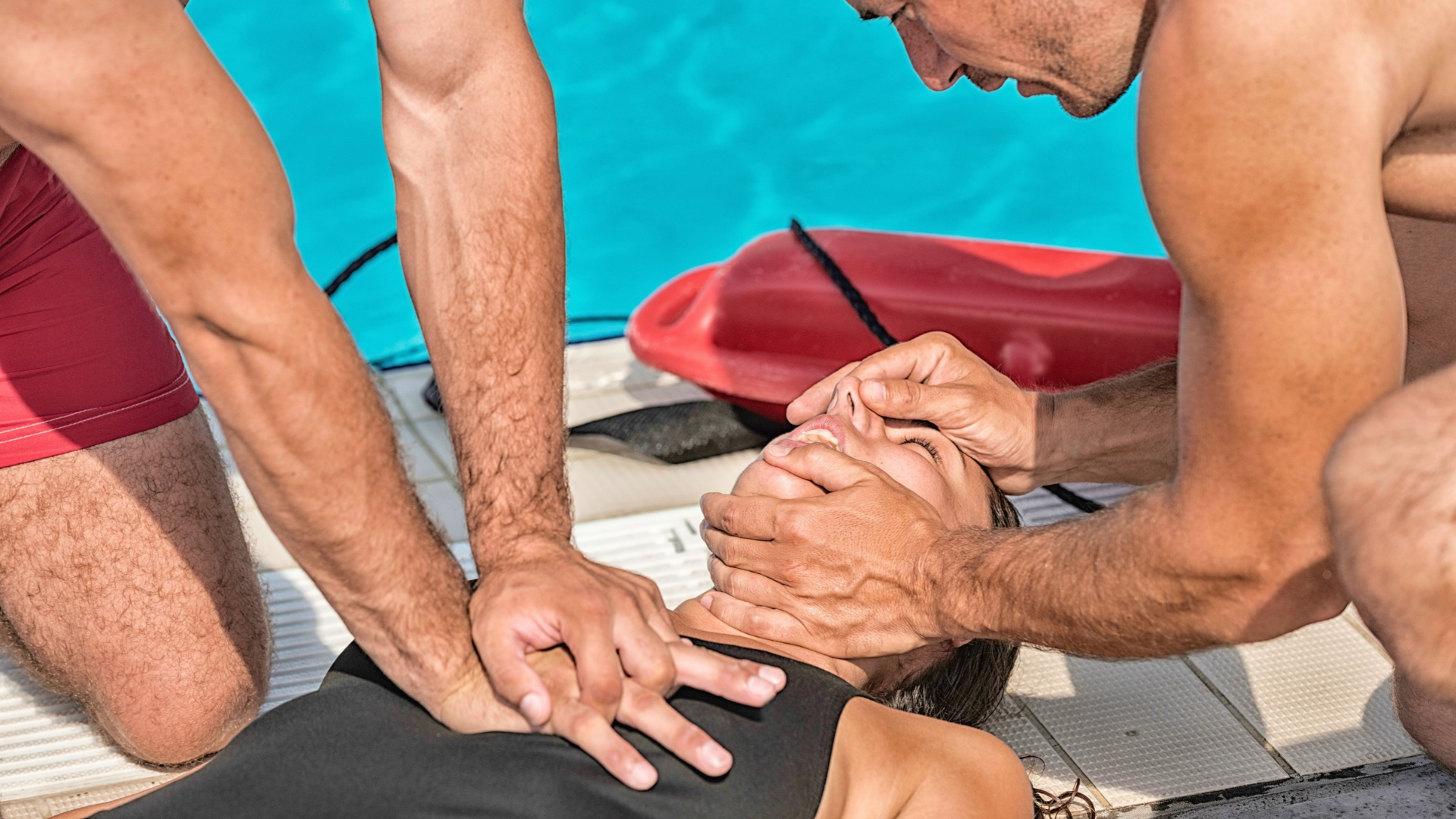
There are more situations that call for CPR than most people realise.
A child pulled unconscious from a swimming pool. A colleague choking on their lunch. A teenager collapsing on the sporting field. Someone having a severe allergic reaction. These emergencies may seem unrelated, but each can quickly become life-threatening, and knowing CPR could help save someone’s life.
CPR (cardiopulmonary resuscitation) helps maintain blood circulation when someone’s heart is no longer pumping effectively. Our heart and lungs work together to deliver oxygen-rich blood to the brain and other vital organs, and when that supply is interrupted, the brain can begin to suffer irreversible damage within minutes. Chest compressions help by moving blood towards the brain and vital organs, while rescue breaths can help deliver oxygen.
While CPR doesn’t fix the problem, it buys time, helping to keep someone alive until emergency responders arrive with treatment. The causes can vary, from a dangerous heart rhythm to a blocked airway or severe blood loss, but the need to keep oxygenated blood circulating around the body is the same.
Most people link CPR with cardiac arrest in older people or those with a heart condition. But the person who needs it could be young, fit and healthy, and their emergency might begin with an accident or an allergic reaction nobody saw coming.
Knowing how these emergencies can lead to someone needing CPR makes it easier to recognise when to act.
Emergencies where CPR could make the difference
1. Drowning
When the body runs out of oxygen
Imagine a child being pulled unconscious from a swimming pool.
Drowning deprives the body of oxygen. If breathing isn’t restored quickly enough, the heart can eventually stop pumping effectively.
In a drowning-related cardiac arrest, CPR with rescue breaths can help provide oxygen and maintain circulation until emergency assistance arrives.
It’s one reason CPR training is so important for parents, grandparents and anyone spending time around water.
2. Choking
When a blocked airway becomes life-threatening
A family barbecue. A workplace lunch. A toddler eating a snack.
Choking can happen anywhere.
A severe airway obstruction prevents oxygen from reaching the lungs. If it isn’t relieved, the person may lose consciousness and progress to cardiac arrest.
Knowing how to respond to choking is the first priority. But if the person becomes unresponsive and isn’t breathing normally, CPR is needed.
A first aid course teaches you how to recognise the difference and respond appropriately.
3. Anaphylaxis
When an allergic reaction becomes a medical emergency
A bee sting. A food allergy. A reaction to medication.
Anaphylaxis can cause the airways to narrow or swell and blood pressure to fall dangerously low. The body may then struggle to get oxygen into the lungs and circulate it to vital organs.
Adrenaline is the essential first-line treatment. But if the reaction becomes severe enough to cause cardiac arrest, CPR may be required while emergency treatment continues.
An emergency doesn’t have to start with the heart to become a situation where CPR is needed.
4. Accidents and severe blood loss
When circulation fails
A serious car accident, a major fall or a traumatic injury can cause substantial internal or external bleeding.
When the body loses too much blood, the heart may no longer have enough circulating blood volume to maintain blood flow to the brain and organs.
This is a particularly important distinction: CPR cannot replace lost blood or stop a haemorrhage. Controlling life-threatening bleeding and obtaining urgent medical assistance are essential.
But in the most severe cases, traumatic cardiac arrest can occur, requiring specialist resuscitation alongside treatment of the underlying injury.
It’s another example of why learning first aid matters: different emergencies require different immediate actions.
5. Overdoses and medication reactions
When breathing or heart rhythm is disrupted
Certain drugs can affect the body in very different ways.
Opioids, including some prescription pain medications, can suppress the brain’s drive to breathe. If breathing stops and oxygen levels fall far enough, cardiac arrest can follow.
Stimulants such as cocaine or methamphetamine can trigger dangerous heart rhythms.
Some medications can also affect the heart’s electrical activity in susceptible individuals.
The appropriate treatment depends on the cause. For opioid overdose, for example, naloxone and respiratory support can be lifesaving.
If cardiac arrest occurs, CPR helps maintain circulation while emergency responders deliver the treatment needed.
6. Electrocution
When electricity disrupts the heart
An electrical accident can interfere with the heart’s normal electrical signals, potentially triggering a dangerous rhythm or cardiac arrest.
These emergencies can occur around faulty equipment, electrical installations or high-voltage sources.
The first priority is ensuring the scene is safe and the electrical supply has been isolated.
If the person is unresponsive and not breathing normally, CPR and an AED may be required.
7. An undiagnosed heart condition
When there are no warning signs
This is perhaps one of the most surprising situations.
Someone can appear perfectly healthy, active and fit while living with an undiagnosed heart condition.
Inherited electrical disorders, such as Long QT syndrome, or structural conditions affecting the heart muscle can sometimes cause sudden cardiac arrest without obvious prior symptoms.
In rare circumstances, a blow to the chest during sport can also trigger a dangerous heart rhythm, even in someone without an underlying heart condition.
It’s why we occasionally hear about young athletes collapsing unexpectedly.
And it’s a reminder that looking healthy doesn’t mean someone could never need CPR.
What these emergencies have in common
Not all of these emergencies lead to cardiac arrest, and prompt first aid or medical treatment can often stop the situation from getting worse. However, each situation can threaten the body’s ability to deliver oxygenated blood to the brain and vital organs, and that’s where CPR matters.
You don’t need to know whether someone has heart disease, what caused their collapse or exactly what’s happening inside their body.
The most important thing is to recognise when someone needs help and know what to do in those critical first minutes.
If a person is unresponsive and not breathing normally:
- Call Triple Zero (000) immediately.
- Start CPR, following the emergency call-taker’s instructions.
- Have someone retrieve an AED and follow its voice prompts.
An AED will only advise a shock if it detects a rhythm that requires one. Not every cardiac arrest is shockable, but CPR remains essential.
You don’t need formal training to attempt CPR or use an AED. However, training gives you the knowledge, practice and confidence to act.
The person who needs CPR might be someone you love
Around 80% of out-of-hospital cardiac arrests happen at home, so the person who needs CPR may not be a stranger on the street. It could be your partner, parent, child or someone else close to you.
Every year, around 32,000 Australians experience an out-of-hospital cardiac arrest, and only around one in ten survive.
But when CPR and an AED are used within the first few minutes, survival can reach as high as 70% in favourable circumstances.
The difference early action can make is extraordinary.
We can’t predict when someone will choke, suffer a serious allergic reaction, have an accident or experience a sudden cardiac arrest, and being young, fit or healthy doesn’t mean someone will never need CPR. What we can do is make sure more people have the skills and confidence to act.
You never know when you might need CPR, but you can make sure you know how to give it.