
If someone collapsed in front of you tomorrow, would you know what to do? And would there be a defibrillator close enough to help?
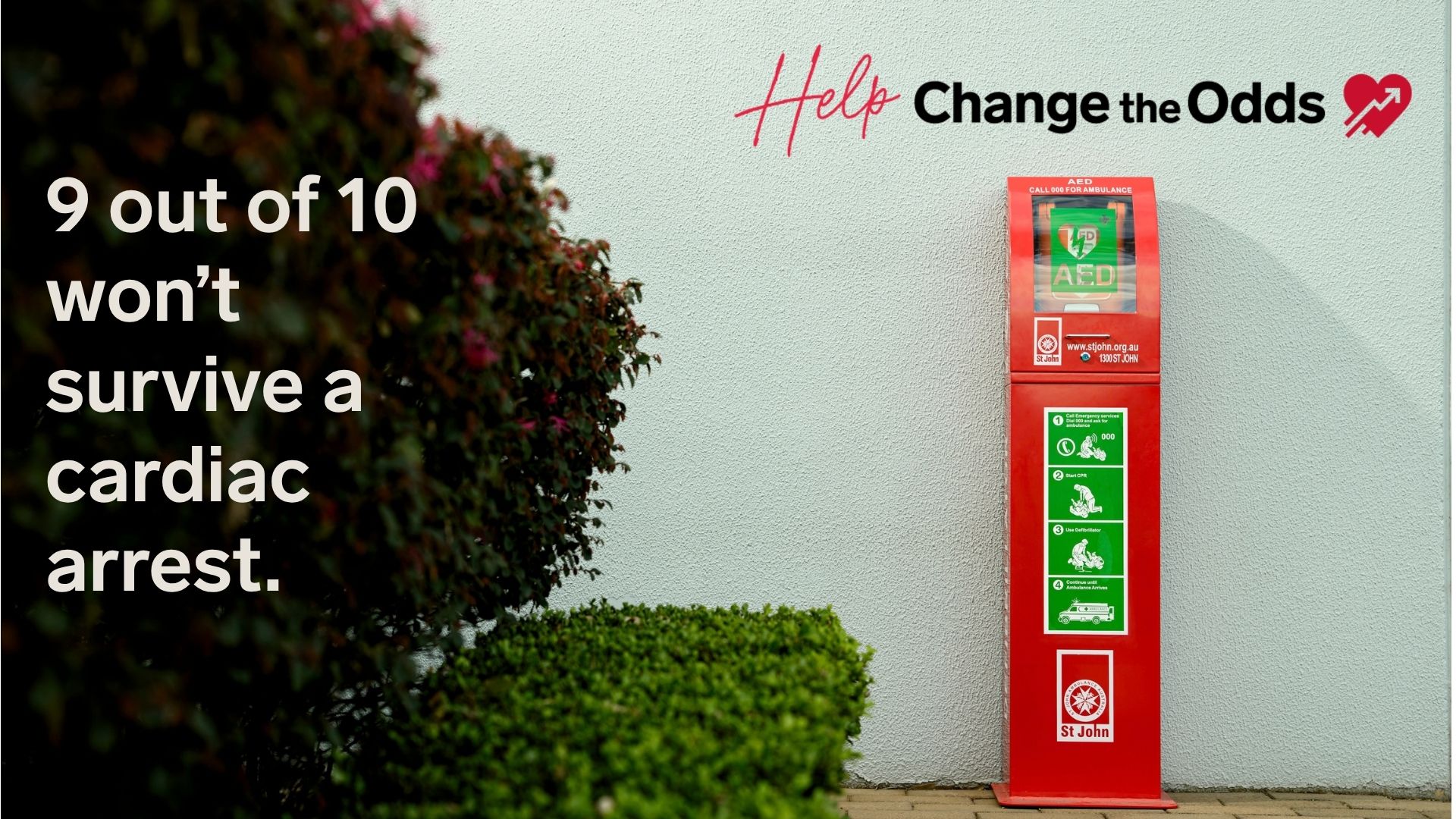
Every year, around 32,000 Australians experience an out-of-hospital cardiac arrest. Only around one in ten survive.
Imagine ten people standing in front of you. Statistically, nine wouldn’t survive.
It’s a confronting reality. But here’s what makes these odds even more confronting: we know there are things we can do to give more people a fighting chance.
When someone nearby starts CPR and an automated external defibrillator (AED) is used within the first few minutes, survival can increase to as high as 70% in favourable circumstances.
So, what actually makes the difference? And how can you make sure your workplace, family or community is better prepared?
This Restart a Heart Day, we’re looking at what changes the odds, and sharing five important questions everyone should ask themselves.
When every minute matters, being ready makes the difference
More than 9,000 people experience an out-of-hospital cardiac arrest in NSW every year.
And when it happens, time is everything.
For every minute without CPR, the chance of survival falls by around 7–10%.
A cardiac arrest can happen anywhere, at work, at home, at the shops or on the sporting field. And often, the people best placed to make a difference are those already nearby.
Someone who recognises what’s happening, calls Triple Zero (000), starts CPR and gets a defibrillator to the person as quickly as possible.
But too often, we’re not ready.
According to research from the Australian Heart Foundation:
- Only around 40% of out-of-hospital cardiac arrests have CPR performed by a bystander.
- Just 2% have an AED used by a bystander before emergency services arrive.
- 39% of Australians surveyed say they aren’t at all confident using an AED.
These figures highlight an important challenge. It’s not enough for lifesaving equipment to exist, or for someone somewhere to know CPR.
We need more people with the skills and confidence to act, and more defibrillators close enough to use when every minute counts.
Five questions that could help save a life
Whether you’re responsible for workplace safety, manage a community facility or simply want to protect the people around you, these five questions are worth asking today.
1. Would you recognise a cardiac arrest?
A cardiac arrest happens when the heart suddenly stops pumping blood effectively around the body.
Someone experiencing cardiac arrest will be unresponsive and not breathing normally. They may gasp or make unusual breathing sounds, which can be mistaken for normal breathing.
If someone is unresponsive and not breathing normally, call Triple Zero (000) immediately, start CPR and follow the emergency call-taker’s instructions.
Recognising the signs and acting quickly can make a critical difference.
2. Do you know how to start CPR?
CPR helps keep blood and oxygen circulating to vital organs while emergency help is on its way.
You don’t need to be a healthcare professional to make a difference. Emergency call-takers can guide you through CPR, even if you’ve never been trained.
But having the skills and confidence to act before an emergency happens can help people respond quickly.
For workplaces, it’s also worth considering how many employees are trained. Having one designated first aider may meet certain requirements, but what happens when they’re on leave, working at another location or simply not nearby?
And CPR skills don’t stay at work. They’re skills your people take home to their families and communities.
3. Where is your nearest defibrillator and could you reach it in time?
An automated external defibrillator, or AED, can analyse a person’s heart rhythm and deliver a shock if needed to help restore a normal rhythm.
AEDs are designed for anyone to use, even without training. They provide clear instructions and will only deliver a shock when appropriate.
But a defibrillator can only help if it’s close enough to use.
Think about your workplace, sporting club or community facility.
Is the AED easy to find? Is it accessible after hours? Could someone retrieve it and return to the person within minutes?
For organisations operating across multiple floors, sites or locations, one AED may not provide the coverage you think it does.
And for people working remotely, travelling or operating away from fixed facilities, portable AEDs can extend lifesaving capability to places where traditional wall-mounted devices may not be accessible.
4. Are enough people around you ready to respond?
Cardiac arrest doesn’t wait for the trained first aider to return from lunch.
The more people who know how to recognise cardiac arrest, start CPR and use an AED, the greater the chance that someone nearby will be ready to act.
For employers, that means thinking beyond minimum training requirements.
Do you have trained people across different shifts, teams and locations? Do new employees know where AEDs are located? Are staff confident about what to do in an emergency?
Investing in CPR and first aid training builds capability that benefits your workplace and extends into the wider community.
5. Is your AED actually ready to use?
Having a defibrillator is an important first step. Making sure it’s ready when needed is just as critical.
AEDs require ongoing checks and maintenance, including monitoring battery and electrode pad replacement dates.
They also need to be clearly signposted and accessible to the people who might need them.
For workplaces and community organisations, it’s worth reviewing not just whether you have an AED, but whether it’s correctly maintained, appropriately located and supported by people who know how to respond.
The question isn’t simply whether you have an AED. It’s whether your people and equipment are genuinely ready when it matters.
This Restart a Heart Day, help us change the odds
Friday 16 October is Restart a Heart Day, a global initiative raising awareness of cardiac arrest and the lifesaving importance of early CPR and defibrillation.
It’s also an opportunity to take a closer look at how prepared we really are.
This Shocktober, St John NSW is challenging workplaces and communities across the state to help us achieve two important goals:
5,000 people booked into First Aid and CPR training.
500 more defibrillators within reach.
Because every person who develops the skills to respond, and every additional AED placed where it’s needed, helps build a more prepared NSW.
Get trained. Get equipped. Help change the odds.
To help workplaces, individuals and communities take action, St John NSW is offering special Shocktober deals throughout October:
- 10% off eligible CPR and First Aid training booked during October, helping more people develop lifesaving skills they can use at work, at home and in their communities.
- $450 off the G5 fixed AED, helping workplaces and community facilities improve access to lifesaving equipment.
- A free Patch ‘n’ Go First Aid kit with every Pocket AED purchased, supporting preparedness for people working, travelling or spending time away from fixed AED locations.
Offers end 31 October 2026.
Whether you book training for your team, review your workplace’s AED coverage or equip a mobile workforce, you’re helping make sure more people have the skills and equipment to respond.
We can’t predict when or where a cardiac arrest will happen. But we can do more to make sure people are ready.
This Restart a Heart Day, don’t just know the odds.
Help change them.
Explore Shocktober training and AED offers →