
As NSW heads into another high-risk bushfire season, emergency service organisations across the state are preparing to respond when disaster strikes. Because being ready to help in an emergency starts long before the first fire.
The Australasian Fire and Emergency Service Authorities Council (AFAC) and Bureau of Meteorology have predicted a heightened risk of fire across Northern and Southeastern NSW, reinforcing the importance of preparation for both emergency services and communities.
Modelling commissioned by Emergency Leaders for Climate Action (ELCA), found Australia’s fire seasons have lengthened by 21 per cent since 1979, due to rising global temperatures. The longer fire seasons are predicted to cost the Australian economy $6 billion each year over the next 30 years, with the majority of these costs being spent on harm to health and wellbeing.
How St John NSW is preparing
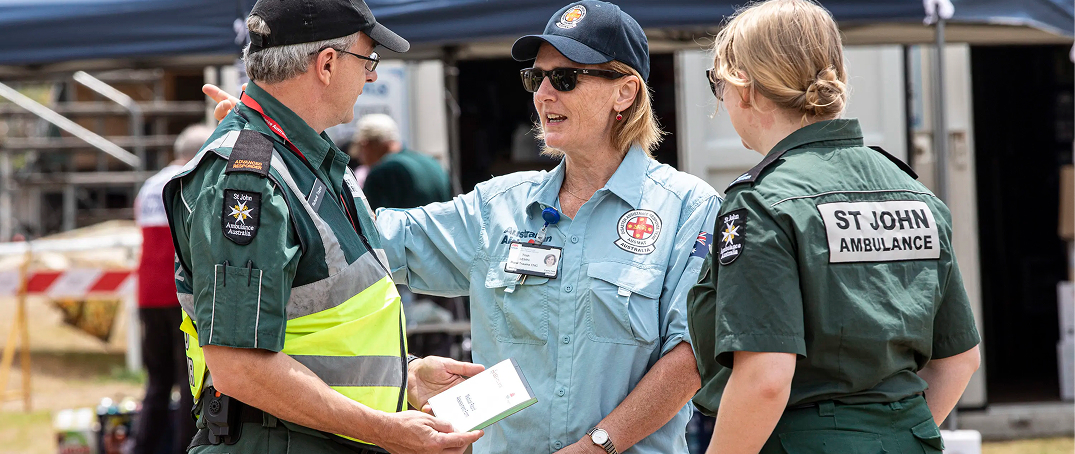
With 72 volunteer divisions across NSW, St John members are out in communities every week, providing first aid and health services at events and activities across the state. This hands-on experience means our volunteers are continually building and maintaining the skills, confidence and capability to respond when needed.
But as the state’s Medical Reserve, our preparation goes even further. Supporting emergency services during natural disasters requires additional training, planning, and coordination to ensure we’re ready to respond when communities need us most.
Throughout the year, our volunteers have participated in emergency simulations alongside agencies including the NSW SES, NSW Rural Fire Service, NSW Ambulance and Marine Rescue NSW, putting our response capabilities to the test in realistic scenarios.
In October, members of the St John Emergency Management Group took part in a bushfire emergency simulation at our Blaxland Training Centre. The exercise brought together operations, planning, logistics, transport and communications teams to test how they would coordinate and respond during a major bushfire emergency.
The simulation challenged teams to respond to rapidly changing conditions, make decisions under pressure, and identify opportunities to strengthen our operational readiness.
It’s this combination of everyday experience, specialist training and collaboration with emergency services that helps ensure St John NSW is ready to support communities when it matters most.
5 simple ways to prepare for bushfire season
While our volunteers prepare to support communities during emergencies, there are also practical steps everyone can take to protect themselves and those around them.
Here are five first aid essentials to help you prepare:
1. Check your first aid supplies.
Keep a well-stocked first aid kit at home, in your car and as part of your emergency supplies. Check expiry dates and replace anything that’s missing or out of date.
2. Know how to treat burns.
Cool a burn under cool running water for 20 minutes, then cover it with a sterile non-stick dressing or loosely applied cling film. Seek urgent medical assistance for serious burns.
3. Prepare for smoke exposure.
Bushfire smoke can trigger asthma and other respiratory conditions. Make sure anyone with a respiratory condition has their medication and action plan readily available.
4. Know what to do in an emergency.
Familiarise yourself with DRSABCD and understand when to call Triple Zero (000). Knowing the first steps could make a critical difference.
5. Refresh your first aid skills.
Make sure your First Aid and CPR training is up to date so you have the confidence and skills to help family, friends, neighbours or colleagues when it matters.
Preparedness starts with all of us
While we hope our emergency response capabilities won’t be needed this bushfire season, St John NSW volunteers will continue training and preparing to support communities across the state.
And while you can’t always predict when an emergency will happen, you can take steps to be ready.
Whether it’s refreshing your first aid skills, checking your emergency supplies or making sure your household knows what to do, a little preparation today can make a big difference tomorrow.
Be ready when it matters: Stock up on first aid kits and essential supplies or explore our First Aid and CPR training courses to build the skills and confidence to respond.